
Welcome to release v2026.08v2026.09!
Welcome back from the summer break ☀️🕳️
After riding out the last heatwave into a short summer break, we’re back with a few thoughts on sustainable AI use and practical tools to reduce your own consumption!
AI-generated content uses electricity and water, and queries of varying complexity use different numbers of tokens, which are the cost of a request.
So when we say the best AI is the AI we don’t use, we also mean that we should use AI more thoughtfully.
Not every task needs the biggest model, not every prompt needs the full context, and above all, not every problem needs AI at all (looking at you, asking Gemini four times a day how to make a cheese sandwich).
But efforts are underway from all sides to make AI use more efficient and economical, and today we’d like to introduce you to a few of those options.
In this issue
- 🤖 3 approaches to more efficient AI: Headroom, Kimi K3, and TOON show how it’s done
- 🌳 aim2balance: A green AI from Germany?
- 🎓 Our AI Academy: We show teams how to use AI safely and efficiently
- ✨ Centigrade website renewed: We’ve relaunched our website!
- ✏️ Centigrade Recommends: Hank Green – Unfortunately, You Need to Know What the Jevons Paradox Is
Until the next release,
Your Centigrade team 💙
3 approaches to more efficient AI
These three developments show that resource conservation in AI is no longer a nice-to-have, but a competitive advantage.
Headroom: less input, the same understanding
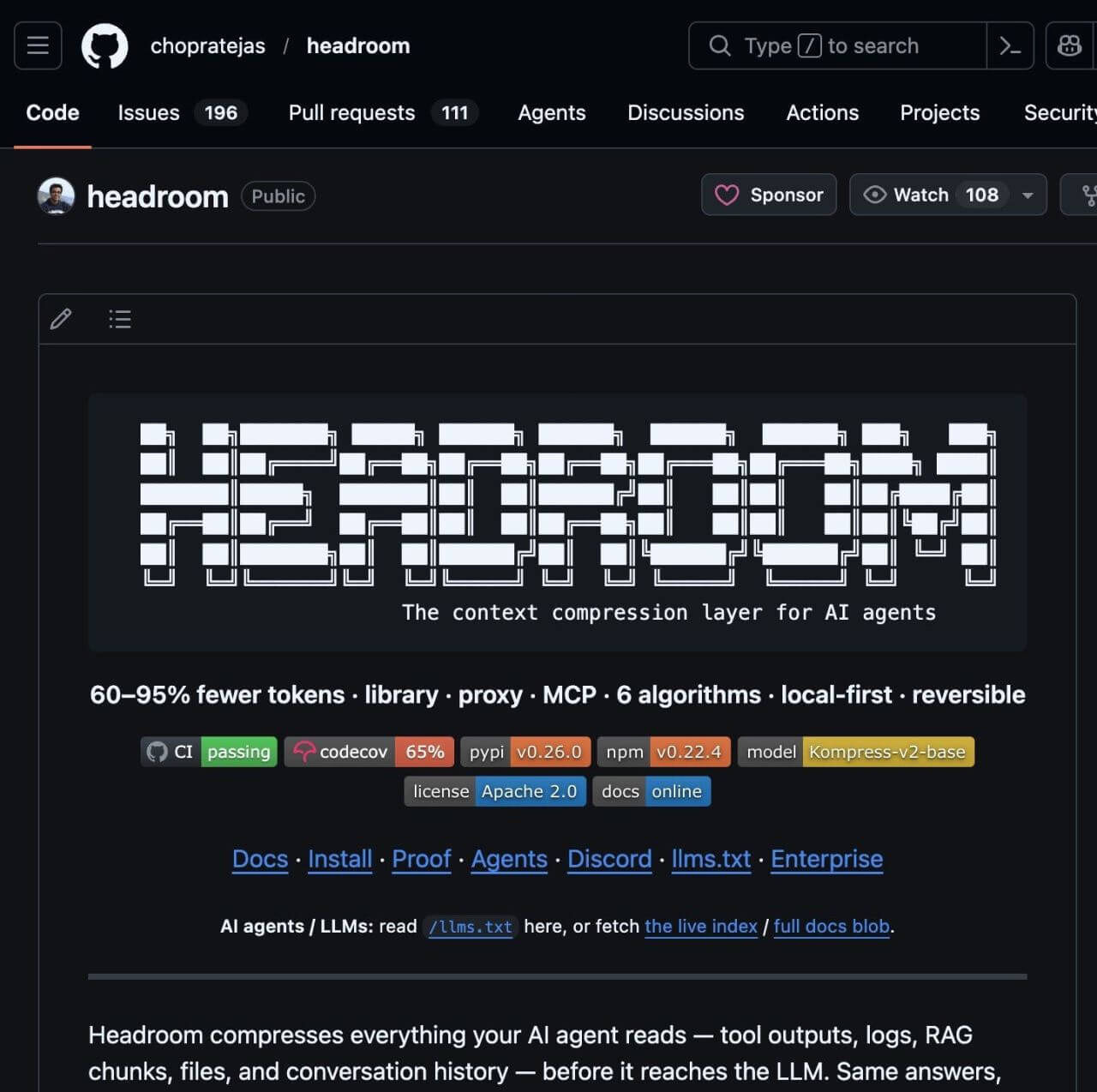
A Netflix engineer open-sourced Headroom, a tool that acts as a local proxy in front of tools such as Claude, Cursor, or Codex and compresses the context before it reaches the model. It uses specialized methods for JSON, code, and tool outputs. The claimed savings are 60 to 95 percent fewer input tokens with comparable answer quality. Of course, compression isn’t magic: complex reasoning tasks can suffer when context is missing, and you’ll need to test whether the proxy overhead is worthwhile in your own setup. The idea is still remarkable!
Kimi K3: efficiency as a statement

China is sending a signal in the same direction, too. With Kimi K3, Moonshot AI has released an open model that uses architectural innovations to target computational efficiency, and has even run on weaker hardware than comparable systems. It changes the picture many people have had of Chinese AI development: it’s no longer just about “faster and bigger,” but increasingly about “more efficient.”
TOON: leaner data, made in Leipzig
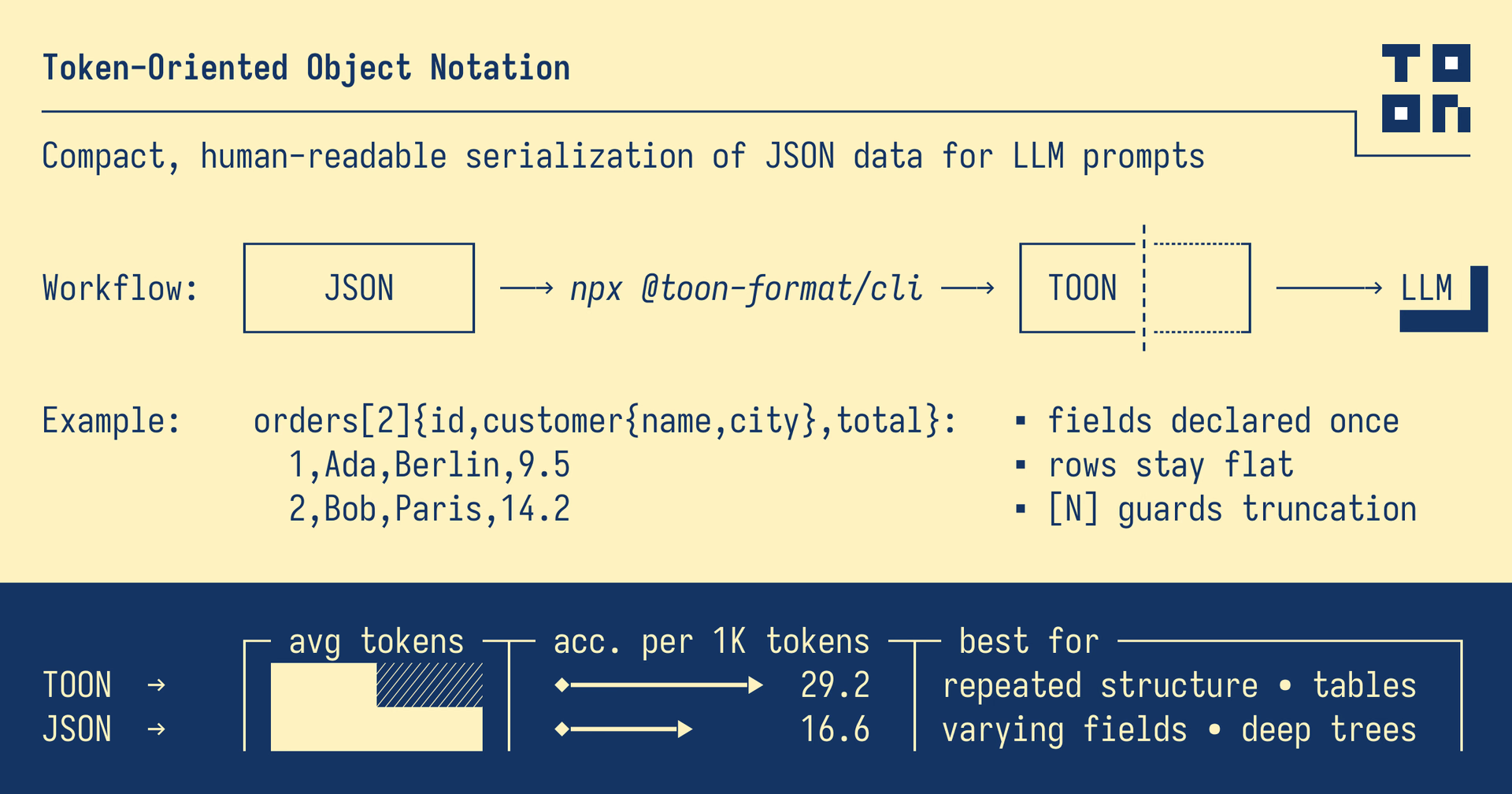
When we send JSON to a language model, we often waste tokens on brackets, quotation marks, and repeated keys: structural overhead with no informational value. That’s exactly where TOON (Token-Oriented Object Notation) comes in. It’s a compact, lossless format that combines YAML-style indentation with CSV-style tabular structures, saving 30 to 60 percent of tokens. It was developed by Johann Schopplich in Leipzig. A nice reminder that relevant AI infrastructure ideas don’t have to come from Silicon Valley.
aim2balance: green AI from Germany?
While Headroom, TOON, and Kimi K3 focus on the technical side, aim2balance.ai takes a different approach. The project describes itself as an “AI Green Layer” and was developed in 2025 by the environmental NGO Bergwaldprojekt e.V. and a team of experts, without investors or pressure from venture capital. The starting point is that AI can democratize knowledge and help solve complex problems, but it also brings growing resource consumption, concentration of power and data among a few corporations, and risks to attention, judgment, and autonomy.
aim2balance.ai aims to reconcile these things: powerful AI that respects people, data, and the environment alike. For about five euros a month, users get around 15 prompts a day, deliberately limited rather than scaled without bounds. It’s an example of how resource conservation depends not only on architecture, but also on who sets the rules and why.
We make teams AI experts

Our AI Academy: learn to use AI safely and efficiently
Our AI Academy teaches teams how to use AI deliberately, in the right places, instead of throwing it at everything indiscriminately. It’s model-agnostic, practical, and built around the same principle we’ve described with “Agents on Rails”: controlled use instead of brute force, focused prompts instead of wasted tokens.
Centigrade Recommends
Unfortunately, You Need to Know What the Jevons Paradox Is – Hank Green
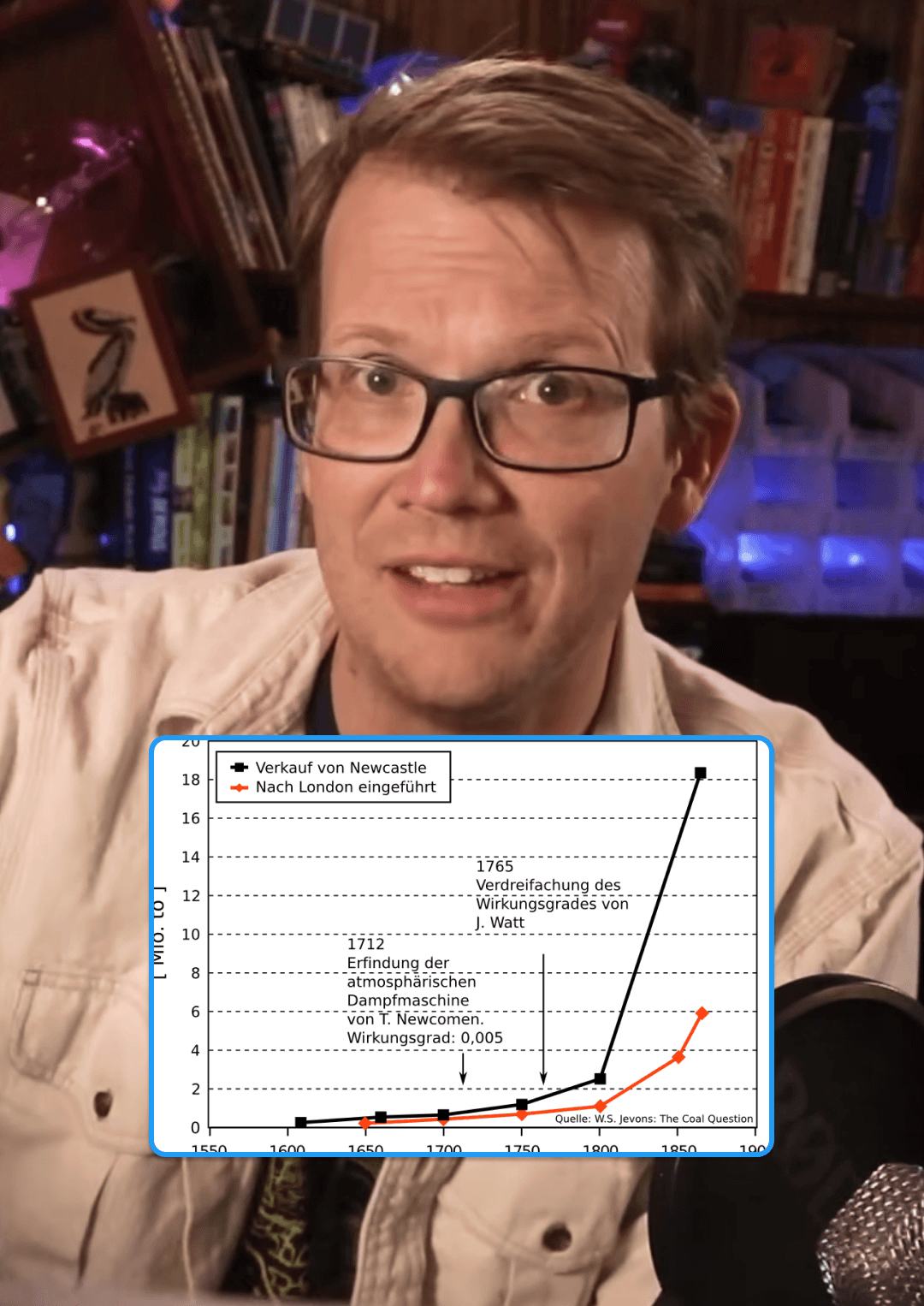
Before we congratulate ourselves too much on how resource-efficient AI is becoming, it’s worth looking at the Jevons paradox. Historically, efficiency gains, such as those made in steam engines, didn’t reduce consumption. Instead, they increased it by opening up new ways to use the technology. Hank Green humorously unpacks this pattern and asks whether more efficient AI models will really lower total consumption, or simply lead us to use even more AI. It’s a good counterpoint to the “efficiency solves everything” narrative.
Centigrade has a new website

It turns out we weren’t completely quiet during our summer break. Quite the opposite: we relaunched our website 🎉 We didn’t just align its look more closely with our brand; we rethought the stack from the ground up. Our new Academy page is especially worth a look. We’re very proud of our team for getting this milestone over the line with a reasonably cool head despite the heat 😎