Welcome to release v2026.07!
AI agents can now do a lot: plan, research, execute, and document. In July, we’ve been thinking about how much of that we actually want to hand over, and what happens to us when we do.
Everyone is using AI, and at the same time we’re suspicious, counting the em dashes and certain this text was written by AI. No question.
So let’s talk about deskilling, power, and disempowerment.
This newsletter gets political.
In this issue
- 🤖 AI Academy download: Agents On Rails: AI with guardrails – why we should stay in control
- 🏆 Uster success story: An AI-powered chatbot for complex domain knowledge
- ⚡️ What AI and politicians have in common: Thomas’ impressions from Nuremberg Digital Festival 2026
- ✏️ Centigrade Recommends: Adam Neely – Suno, AI Music & The Bad Future
- ✏️ Centigrade Recommends ALSO: Rainer Mühlhoff – Artificial Intelligence and the New Fascism
Until the next release,
Your Centigrade team 💙
AI Academy download

Agents On Rails — AI on rails, with humans in the driver’s seat
In June, we held our Agents on Rails webinar. It wasn’t just about making AI agents as autonomous as possible, but about using them sensibly: with clear boundaries, transparent processes, and people at the key decision points. For example, an agent can prepare a process, but shouldn’t approve it on its own.
Because full autonomy sounds tempting, but raises a fundamental question: what do we still want to do ourselves? Which skills do we want to retain, not because AI can’t do them, but because we want to be able to do them?
Deskilling is a quiet form of disempowerment. We give up skills without recognizing it as a loss of power, and only later notice how much judgment we’ve lost. The choices we make today will shape our future.
We believe that using AI in a way that keeps us thinking alongside it leads to better results and helps us retain the ability to assess those results.
The webinar recording is now available as a free download:
Thomas at NUEDIGITAL 2026
What AI and politicians have in common
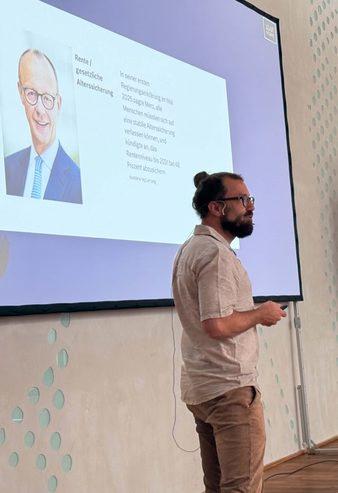
At Nuremberg Digital Festival 2026, our CEO Thomas Immich and Michael Briem from mindline energy gave a talk built around a provocative question: what actually distinguishes a politician from a language model? The answer they developed with the audience was more uncomfortable than you might expect, and has a lot to do with how AI really works.
Uster success story

Fewer questions, more answers: an AI-powered chatbot for easy access to complex data
Making complex specialist knowledge accessible without someone having to answer the same questions again and again. That was the challenge at Uster Technologies, one of the world’s leading textile companies.
Uster’s customers work with highly specialized production and service knowledge every day. Until now, they could only access it by contacting experts directly, which took time on both sides. Together with Uster, we developed an AI assistant that makes this domain knowledge accessible in a structured way: context-aware, right in the workflow, without detours.
The goal wasn’t automation, but empowerment. Anyone with a question can get a precise answer independently, at any time.
Centigrade Recommends
Suno, AI Music and the Bad Future – Adam Neely
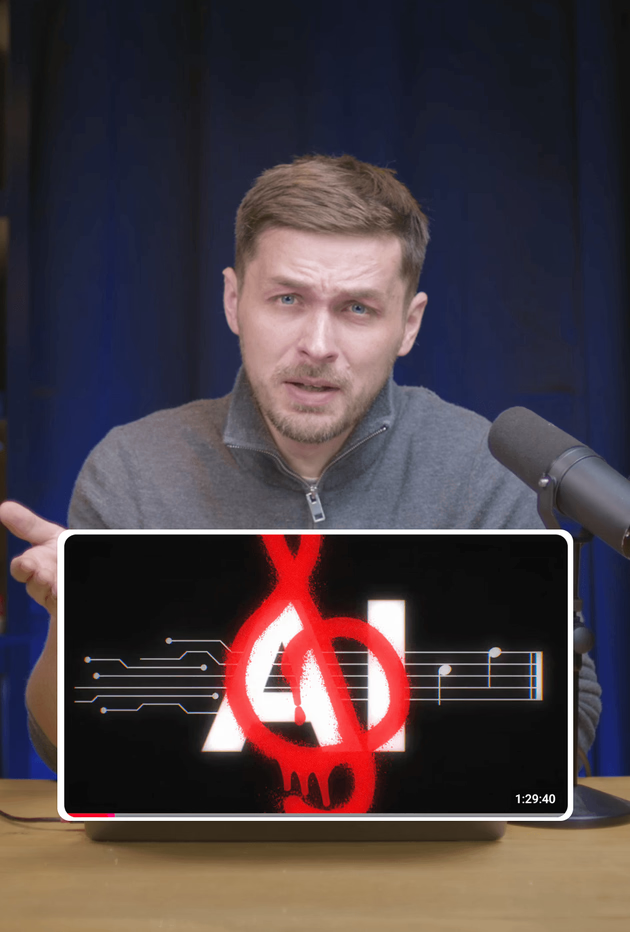
I don’t think many videos about AI have made as strong an impression on me as this one. Adam Neely uses AI music to show what happens when we systematically outsource creative decisions. Our ability to make judgments starts to atrophy. And it doesn’t just affect the creative industries: a doctor who spends three months using AI to assess colonoscopies detects significantly fewer findings afterward.
But the more important point Adam makes, and the core of the video, is that the ideology behind Silicon Valley optimism — speed, disruption, impatience as a virtue — has historical precedents. We should call it what it is.
— Eric, Brand & Marketing
Centigrade Recommends ALSO
Artificial Intelligence and the New Fascism – Rainer Mühlhoff
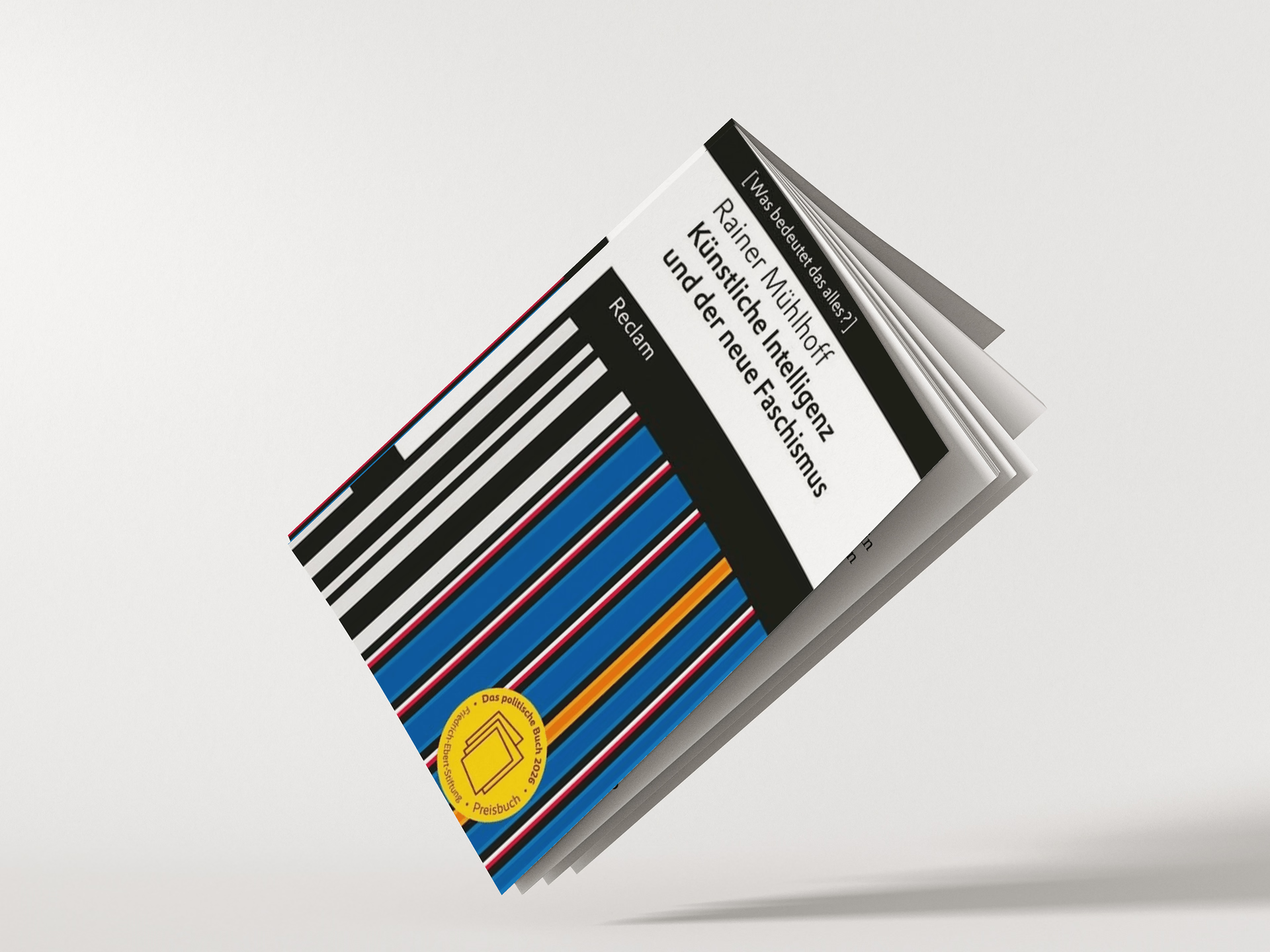
If you’d like to go deeper after watching the video, take a look at Rainer Mühlhoff’s book or one of his talks on YouTube. He explores the power structures that emerge when AI is developed without democratic oversight, arguing that structural fascism isn’t an all-or-nothing state, but something introduced gradually.
It’s a thesis that does more than make you think; it calls you to act.