
More efficient app development
The insights gained during the project pave the way for more efficient mobile app development with a strong user-centered focus. Together with the Fraunhofer Institute for Experimental Software Engineering, BridgingIT GmbH, and Heilbronn University, a process model and a toolkit of methods were developed to continuously integrate usage data into the optimization process of an application. This makes it possible to increase testing activity for mobile apps tenfold and quadruple device coverage without increasing resource requirements. Centigrade developed a user story-based usage data analysis approach, intended to make it easier for product owners in the future to optimize their backlog cost-effectively and with limited resources while still incorporating user needs. In the foreseeable future, it will therefore be possible to identify and eliminate defects early and, in doing so, improve overall user acceptance of mobile apps.
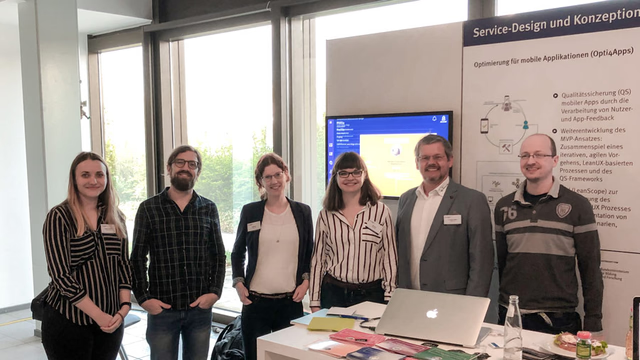
Opti4Apps final event at the Digivation service conference
At the Digivation 2019 service conference, the project's joint results were presented to the public. At a booth, all interested visitors were able to view the process for quality assurance in mobile apps. The project team explained how processing user and app feedback helps eliminate defects and create an app as a Minimum Viable Product (MVP).
To align the app as closely as possible with user needs, personas and scenarios for potential app users were developed in the project in line with the Continuous UX approach created by Centigrade. Among other things, the [LeanScope Persona Tool - Link is no longer available - Link: https://lite.leanscope.io] was used. LeanScope enables the creation of personas, i.e. prototypical representations of future users. As part of the Opti4Apps project, the tool was further developed, evaluated, and presented at Digivation.
Centigrade is pleased to have contributed to this diverse and highly interesting topic and to continue advancing this field.